Preparing Your Startup for the Tech Trends of 2026
5 May 2026
Let me be straight with you. If you're running a startup right now, you're probably already exhausted by the pace of change. Every week there's a new tool, a new platform, a new "must-have" technology that promises to save you time, money, or your sanity. And honestly? Most of it is noise. But 2026 is different. The trends coming down the pipeline aren't just incremental updates; they're foundational shifts. Think of it like this: we've been building sandcastles on the beach for the last decade, and now the tide is coming in. If you don't start building on higher ground, you're going to get washed away.
So how do you prepare? You don't need a crystal ball. You need a strategy. You need to look at the signals that are already here and figure out what they mean for your specific business. This isn't about chasing every shiny object. It's about building a startup that can bend with the wind instead of snapping in half. Let's dig into what actually matters.
The End of the "AI as a Feature" Mentality
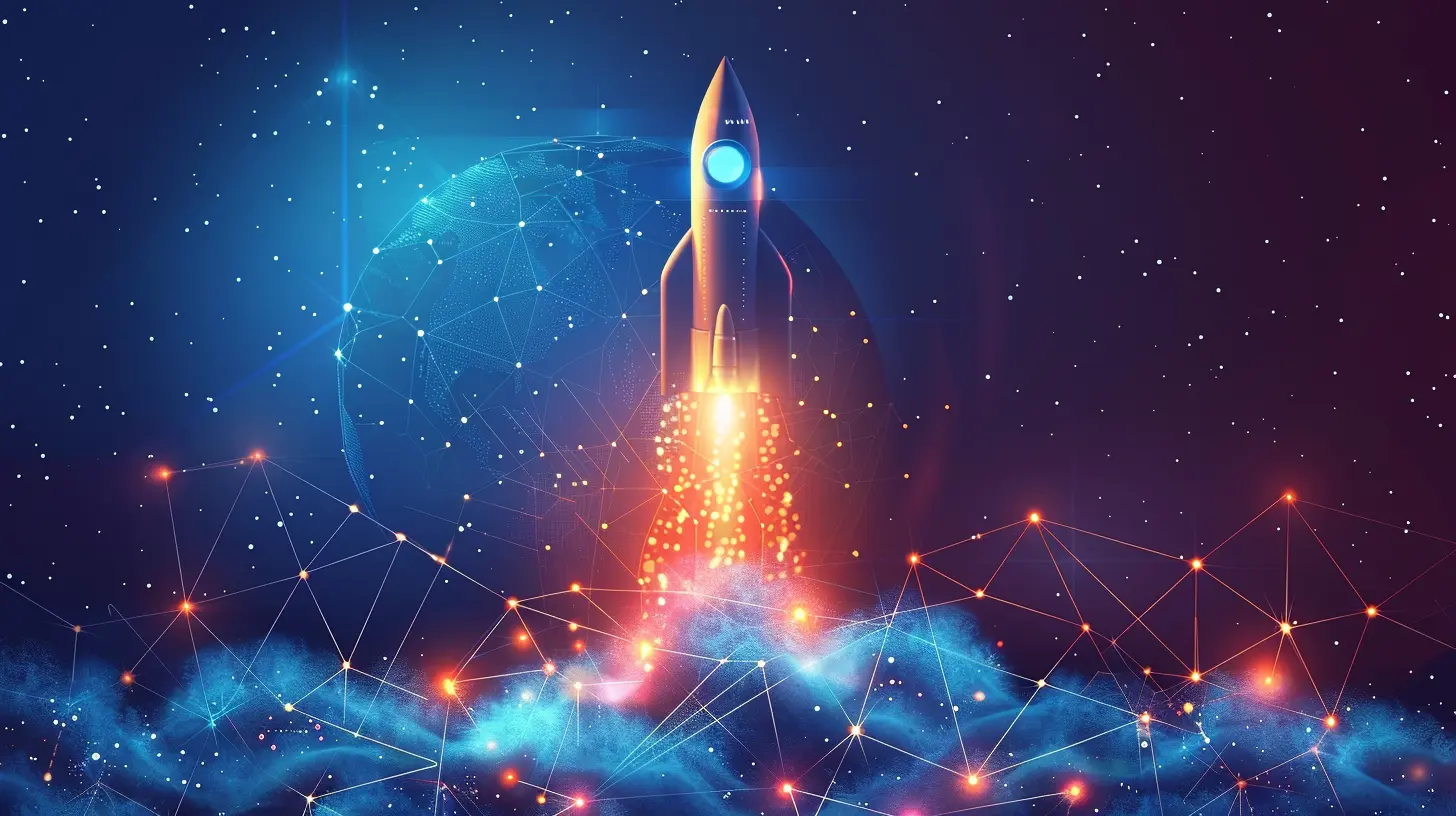
Remember when adding a chatbot to your website was considered an AI strategy? That's like saying you've become a chef because you bought a microwave. By 2026, AI won't be a feature you bolt onto your product. It will be the operating system of your entire business. The startups that survive won't be the ones with the flashiest AI demos. They'll be the ones that fundamentally reimagine their workflows around AI.Think about your customer support team. Right now, you probably have a human handling tickets, maybe with a bot handling the first line. In 2026, the bot won't just answer questions; it will predict what customers need before they ask. It will analyze sentiment, cross-reference order history, and even escalate to a human with a full summary and suggested resolution. That's not a feature. That's a new way of doing business.
So what do you do today? Start mapping out every single repetitive task in your company. Every report that gets generated manually. Every email that gets written from scratch. Every data entry point. If it can be automated, it will be automated. Your job is to figure out which of those tasks are actually valuable for humans to do and which ones are just busywork. The companies that treat AI as a co-pilot, not a gimmick, will be the ones flying high in 2026.
But What About the Cost?
I hear you. You're thinking, "I'm a startup. I don't have the budget for a custom AI infrastructure." Fair point. But here's the secret: you don't need to build it. The AI models of 2026 won't be expensive, proprietary systems locked behind enterprise contracts. They'll be cheap, open, and embeddable. The real cost won't be the technology; it will be the expertise to integrate it wisely.The smartest move you can make right now is to hire or contract someone who understands how to wire AI into your specific processes. Not a generalist who can prompt ChatGPT, but someone who knows how to build a pipeline that turns your raw data into actionable intelligence. That person is worth their weight in gold. Because by 2026, the question won't be "Should we use AI?" It will be "Why aren't you using AI yet?"

The Privacy Paradox and Zero-Trust Everything
Here's where things get uncomfortable. We're entering an era where trust is the most valuable currency a startup can have. And trust is getting harder to earn every single day. Data breaches, surveillance capitalism, and the general creepiness of how our information is used have made customers paranoid. And honestly, they should be.By 2026, privacy won't be a compliance checkbox. It will be a competitive advantage. Startups that can prove they don't collect unnecessary data, that they process information locally on the user's device, and that they don't sell or share anything without explicit consent will win. The old model of "collect everything, figure out what to do with it later" is dead. It's toxic.
This is where the concept of "zero-trust" comes in. Not just for cybersecurity, but for your entire business model. Zero-trust means you assume nothing is safe by default. Every user, every device, every connection must be verified. It sounds paranoid, but it's the only sane approach. If you build your startup with zero-trust architecture from day one, you won't have to scramble to retrofit security later. And your customers will notice. They'll see that you respect their boundaries, and they'll reward you with loyalty.
The Cost of Being Creepy
Let me give you a real example. Imagine you're a fintech startup. You could track every single click, every scroll, every hesitation a user makes. You could build a detailed psychological profile. You could sell that data to advertisers. And you'd make a lot of money in the short term. But in 2026, when a journalist or a whistleblower exposes your practices, you won't just lose customers. You'll lose your entire business. The regulatory hammer will come down, and the public backlash will be brutal.On the other hand, imagine you're a startup that says, "We only store the minimum data needed to process your transaction. We don't track you. We don't profile you. Your data stays on your device." That's a powerful message. It's a promise. And in a world where everyone is selling your secrets, that promise is gold.

The Rise of Ambient Computing and the "Invisible Interface"
Let's talk about how people will actually interact with technology in 2026. Spoiler: they won't be staring at screens as much. The next wave of computing is ambient. It's voice. It's gesture. It's context-aware systems that anticipate what you need without you having to ask.Think about the smart home devices you already have. They're clunky. You have to say "Hey Google" or "Alexa" like you're summoning a genie. That's not ambient. That's a command line with a nicer voice. By 2026, truly ambient computing means you walk into a room, and the system knows you're there. It knows your preferences. It adjusts the lighting, the temperature, the music, and your calendar without you saying a word. It's like having a butler who never gets in your way.
For startups, this changes everything about product design. If your product requires a user to open an app, navigate a menu, and tap a button, you're already behind. The winners will be the ones who design for zero friction. Your product should work in the background, solving problems before the user even knows they exist.
How Do You Build for Nothing?
I know what you're thinking. "That sounds great, but how do I build a product that disappears?" Start by asking yourself a brutal question: What is the single most frustrating step your customer has to take to get value from your product? Then eliminate it. Not improve it. Eliminate it.If you sell project management software, the frustrating step might be entering all the tasks manually. So you build an integration that reads emails, Slack messages, and meeting notes, then auto-populates the task list. The user doesn't have to do anything. The software just... works. That's ambient. That's invisible. That's the future.
The hard part is that building invisible products requires deep empathy for your user. You have to understand their context, their environment, their pain points at a granular level. You can't just guess. You have to observe. You have to live in their world. But if you do it right, your product becomes indispensable without ever being intrusive.
The Hybrid Workforce is Not a Trend, It's the Baseline
We've been talking about remote work for years, but 2026 will be the year we finally admit that "return to office" is a fantasy. The genie is not going back in the bottle. The real challenge isn't where people work; it's how they work together when they're spread across time zones, cultures, and devices.The startups that thrive will be the ones that treat their workforce as a distributed organism, not a collection of isolated individuals. This means rethinking everything from communication to culture. You can't just rely on Slack and Zoom. Those tools were designed for a world where everyone was in the same building. They're not enough.
By 2026, we'll see the rise of "digital twins" for teams. Imagine a virtual space that mirrors your physical office, where you can bump into colleagues, have spontaneous conversations, and collaborate on whiteboards. Not a boring video call, but an actual 3D environment that feels real. It sounds like science fiction, but the technology is already here. The question is whether you're ready to adopt it.
Culture in a Distributed World
Here's the thing that most startups get wrong about remote work: they think it's about tools. It's not. It's about trust. If you can't trust your team to get their work done without you watching them, you have a management problem, not a technology problem. By 2026, the startups that survive will be the ones that hire for autonomy and accountability, not for compliance.So start now. Stop measuring hours. Start measuring outcomes. Give your team the freedom to work when and where they're most productive. Invest in async communication practices. Write things down. Record decisions. Build a culture where transparency is the default. Because when your team is scattered across the globe, the only thing that holds them together is a shared purpose and a clear set of principles.
The Sustainability Imperative (Yes, It's Real This Time)
I know, I know. You've heard this before. "Go green or go home." But 2026 is different because the pressure is coming from everywhere. Customers are demanding it. Investors are requiring it. And regulators are enforcing it. If your startup doesn't have a credible sustainability plan, you won't just be seen as uncool. You'll be seen as irresponsible.But here's the opportunity: sustainability isn't just a cost. It's a differentiator. If you can prove that your product or service actually reduces waste, lowers carbon emissions, or promotes circularity, you have a story that resonates. And in a crowded market, a good story is everything.
Think about your supply chain. Can you source materials locally? Can you reduce packaging? Can you make your product last longer or be easily repaired? These aren't just ethical choices. They're business decisions that save money and build brand loyalty.
The Trap of Greenwashing
Be careful. Customers in 2026 will have zero tolerance for greenwashing. They can smell insincerity from a mile away. If you claim to be sustainable but your manufacturing process is still dirty, you'll get called out. And once you lose trust, you never get it back.Instead, be honest. Say, "We're not perfect, but here's our roadmap to improvement." Show your data. Let third parties audit your claims. Transparency is the only way to build credibility. And in a world where everyone is shouting for attention, credibility is the one thing that cuts through the noise.
The Final Piece: Resilience Over Optimization
Let me leave you with one big idea. For the last twenty years, startups have been obsessed with optimization. Make the funnel tighter. Reduce the churn. Increase the conversion rate. Optimize, optimize, optimize. And that worked when the world was stable. But 2026 is not going to be stable. There will be economic shocks, supply chain disruptions, regulatory changes, and maybe even a pandemic or two.The startups that survive won't be the most optimized. They'll be the most resilient. They'll have redundant systems. They'll have cash reserves. They'll have diverse revenue streams. They'll have the ability to pivot quickly when things fall apart.
So stop trying to squeeze every last drop of efficiency out of your current model. Start building buffers. Start investing in optionality. Start asking yourself, "If everything went wrong tomorrow, would we still be standing?" If the answer is no, you have work to do.
Preparing for 2026 isn't about predicting the future. It's about building a startup that can handle any future. It's about being adaptable, trustworthy, and human. Because in the end, technology is just a tool. The real magic is in the people who use it.
all images in this post were generated using AI tools
Category:
Startup AdviceAuthor:

Baylor McFarlin
Discussion
rate this article
1 comments
Harrison Bass
Stay agile and embrace innovation to thrive in the evolving tech landscape.
May 5, 2026 at 10:25 AM
Baylor McFarlin
Absolutely, being adaptable and open to new ideas is key to success in this ever-changing tech world.