The Essential Project Manager's Toolkit for 2027
19 April 2026
Let’s be honest for a second. If you’re a project manager still relying on the same Gantt chart software and Monday morning status emails you used in 2020, you’re not just behind the curve—you’re on a different road entirely. The landscape of work has been tectonically reshaped. Hybrid teams are the norm, AI is your new (and sometimes terrifyingly smart) intern, and the very definition of a "project" is faster, more fluid, and more complex than ever.
So, what’s in the kit of the project manager who not only survives 2027 but thrives? It’s no longer just about a killer spreadsheet. It’s about an integrated arsenal of mindset, methodology, and machine intelligence. Think of it like this: your old toolkit was a reliable Swiss Army knife. The 2027 toolkit is a full-spectrum mission control center. Let’s unpack it.
The Foundational Layer: Mindset & Strategic Agility
Before you download a single app, you need to upgrade your internal operating system. The tools are useless without the right wielder.From Process Cop to Value Orchestrator
Gone are the days of being the hall monitor of deadlines. The essential PM of 2027 is a Value Orchestrator. Your primary metric is shifting from "on time, on budget" to "outcome delivered, impact achieved." You’re not just managing tasks; you’re conducting a symphony of resources, technology, and human ingenuity towards a strategic goal. This means you’re constantly asking, "Why are we doing this?" and "Is this the most valuable thing we could be doing right now?" If you can’t articulate the ‘why,’ your project is already on shaky ground.Embracing Ambiguity as a Feature, Not a Bug
Projects in 2027 will start with more unknowns than knowns. Market shifts, tech disruptions, and geopolitical wobbles are baked into the timeline. Your toolkit must include strategic ambiguity frameworks. This is a fancy way of saying you need to be comfortable mapping multiple potential futures (scenario planning) and building projects that are resilient, modular, and adaptable. It’s like building with Lego, not carving from marble—you can reconfigure as needed without starting from scratch.
The Core Digital Arsenal: Software & Platforms
This is the tangible tech in your belt. But in 2027, it’s less about single-point solutions and more about interconnected, intelligent ecosystems.AI-Powered Project Intelligence Hubs
Forget basic project management software. The centerpiece of your digital toolkit will be an AI-Powered Project Intelligence Hub. This isn't just a place to assign tasks. It’s a platform that:Predicts Risks: Using historical project data and current performance, it will flag potential delays or budget overruns weeks* before they happen, with suggested mitigations. Imagine a weather app for your project’s health.
* Automates Administrative Grunt Work: It drafts status reports, optimizes meeting agendas based on pending decisions, and even summarizes key discussions from voice calls. You get your brain back for strategic thinking.
* Optimizes Resources Dynamically: It analyzes team members' workloads, skills, and even historical performance on similar tasks to suggest the optimal assignment, preventing burnout and underutilization.
Platforms like ClickUp, Asana, and Monday.com are already racing toward this AI-augmented future. Your job is to choose one that integrates deeply with your company’s other systems.
Unified Work Orchestration Platforms
Siloed tools create friction. In 2027, your toolkit needs a Unified Work Orchestration Platform that seamlessly connects your project boards with your design tools (Figma), your docs (Notion, Coda), your code repos (GitHub, GitLab), and your comms (Slack, Teams). The goal is a single source of truth where context lives where the work happens. No more digging through 20 tabs to find the latest prototype or requirement doc. This seamless flow is the oxygen for a high-performing team.Advanced Real-Time Collaboration Suites
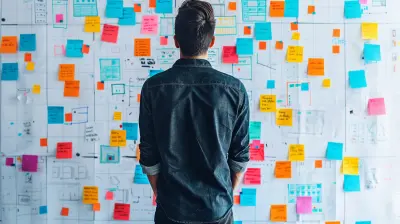
Hybrid and async work are permanent. Your collaboration tools need to be experience-first. We’re talking about:* Spatial Canvas Tools (like Miro or FigJam): These go beyond digital whiteboards. They become persistent project war rooms where strategy is visualized, processes are mapped, and brainstorming happens asynchronously across time zones.
* Async-First Video & Communication: Tools like Loom or Krisp become indispensable. Communicating complex ideas via short, watchable videos saves countless meetings. Noise-cancellation AI ensures clarity from anywhere, be it a coffee shop or a kitchen table.
The Human-Centric Toolkit: Skills & Techniques
The machines handle the data; you handle the people. This is your irreplaceable value.Neuro-Inclusive Leadership & Communication
Teams are more neurodiverse than ever. Your communication toolkit must expand. This means:* Offering information in multiple formats (written, visual, verbal).
* Structuring meetings with clear agendas sent in advance and allowing for written input.
* Using tools that support different work styles (e.g., focus timers, "do not disturb" schedulers).
Understanding and leveraging cognitive diversity will be a superpower for unlocking innovation.
Stakeholder Empathy Mapping & Digital Storytelling
Managing up and across is 50% of the job. In 2027, you’ll use digital stakeholder empathy maps (in your Miro board, of course) to track not just who needs what, but their fears, motivations, and preferred communication channels. Then, you’ll use data visualization and digital storytelling tools (like Power BI, Tableau, or even advanced PowerPoint/Google Slides) to craft compelling narratives around project progress. You’re not showing a chart; you’re telling the story of value creation.Continuous Learning & "Upskilling on the Fly"
Your own skillset cannot be static. Your toolkit must include a personal learning radar. Use curated newsletters, AI learning recommenders (like O'Reilly's), or platforms like Coursera or LinkedIn Learning to dedicate time weekly to micro-learning. Is Web3 impacting your industry? Is there a new AI ethics framework? You don’t need to be an expert, but you must be conversant. The project manager is the hub of information, and a rusty hub grinds everything to a halt.
The Emerging Frontier: Specialized Tools for 2027
These are the tools on the cutting edge that will differentiate the good from the great.Sustainability & ESG Impact Trackers
Projects will be measured not just on profit, but on planet and people. Your toolkit will include ESG (Environmental, Social, Governance) impact dashboards. These will help you calculate a project’s carbon footprint, track diversity in vendor selection, and ensure ethical data use. This isn’t just PR; it’s becoming a core compliance and value metric for stakeholders and customers.Metaverse & VR Prototyping Environments
For certain industries (product design, architecture, complex engineering), the Metaverse or VR spaces will become a vital part of the prototyping toolkit. Imagine walking through a 3D model of a new building with your global team in real-time, or testing a virtual product assembly before a single physical part is made. It reduces costly errors and creates unparalleled alignment.Predictive Wellbeing & Team Pulse Analytics
People are your most important resource. Advanced people analytics tools (with strict ethical privacy guards!) will integrate with your project hub to provide predictive wellbeing insights. They might flag that a team is heading toward burnout based on work patterns, meeting overload, or communication tone analysis. This allows you, the human leader, to proactively intervene—reprioritize work, encourage time off, or simply check in. It’s management by caring, powered by data.Putting It All Together: Your Toolkit Checklist for 2027
So, what does this look like in practice? Here’s your starter pack:1. Your AI Hub: Choose one primary platform (e.g., ClickUp AI, Asana Intelligence) and master it.
2. Your Unified Canvas: Adopt a visual collaboration tool (Miro) as your team’s connected brain.
3. Your Async Video Sidekick: Standardize on a tool like Loom for clear, personal communication.
4. Your Learning Interface: Set up a simple system (like a curated Feedly/Pocket list) to feed your curiosity weekly.
5. Your Narrative Engine: Get proficient in one data storytelling tool, even if it's just advanced charts in Google Sheets.
6. Your Humanity Check-In: Schedule recurring, agenda-less "coffee chats" with team members. No tool can replace genuine connection.
The project manager's role in 2027 is more thrilling and more vital than ever. You are the integrator, the translator between human and machine, strategy and execution. By curating this essential toolkit—a blend of strategic mindset, intelligent software, and deepened human skills—you won’t just manage projects. You’ll lead the future of work, one adaptive, value-driven initiative at a time. So, what’s the first tool you’re going to upgrade?
all images in this post were generated using AI tools
Category:
Project ManagementAuthor:

Baylor McFarlin
Discussion
rate this article
2 comments
Ramona Larsen
In a fast-evolving landscape, the 2027 project manager will need adaptability and tech-savvy tools. Emphasizing collaboration and transparency is crucial. As remote work continues to shape project dynamics, integrating real-time communication and data analytics will streamline processes and enhance team effectiveness. Stay ahead of the curve.
June 28, 2026 at 3:08 AM
Baylor McFarlin
Absolutely! Embracing adaptability and the right tech tools will be key for project managers in 2027. Collaboration and transparency will drive team success in this evolving landscape. Let's stay proactive!
Finnegan Dorsey
Great insights on must-have tools for project managers in 2027! It’s exciting to see how technology can make our jobs easier and more efficient. Here’s to embracing change and thriving in the future of project management!
April 23, 2026 at 4:36 AM
Baylor McFarlin
Thank you! I'm glad you found the insights valuable. Here's to a future full of innovation in project management!